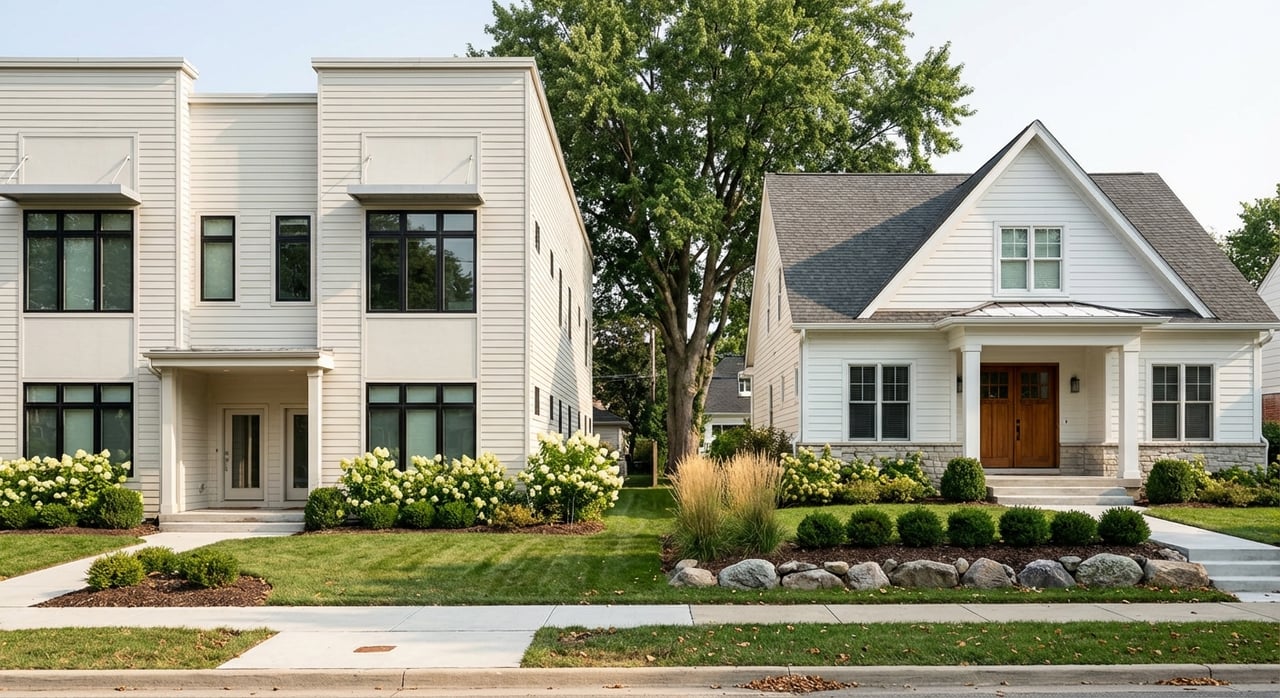
Buying your first Madison home is exciting, but picking between a condo and a single-family house can feel like two good options with very different to-do lists. You want the right fit for your budget, lifestyle, and long-term plans, without surprises after closing. In this guide, you’ll learn how monthly costs actually compare, what HOA dues cover, how insurance and financing differ, and what local rules might change your choice. Let’s dive in.
Madison snapshot: prices and pace
In recent local MLS summaries, Madison single-family homes have shown a higher median sale price than condos. Examples from 2025 reports put single-family around $469,900 and condos around $319,000. Both types sold quickly when priced well, with days on market often just over a week for houses and about a week and a half for condos. Different data providers report different citywide medians depending on time windows and property mix, so use MLS comps for the exact neighborhood you’re targeting.
What this means for you: condos can offer a lower entry price and smaller down payment, but the true monthly number depends on HOA dues, insurance, property taxes, and a maintenance buffer.
True monthly cost: condo vs house
Focus on your full monthly outlay, not just the mortgage payment. Build a simple worksheet for each home you like.
- Mortgage principal and interest
- Property taxes for the specific address, checked through the county or city assessor
- Home insurance type and quote
- HOA dues for condos, or a maintenance reserve for houses
- Utilities and any parking fees
- A buffer for big items like a roof or a possible condo assessment
A common planning rule for houses is to set aside about 1 percent to 3 percent of the home’s value per year for maintenance and small repairs. Newer, smaller condos often mean less routine upkeep, while older single-family homes can bring bigger tickets over time. For taxes and local rates, review your specific address on the Dane County Treasurer’s site so your escrow estimate is accurate.
Helpful references:
- Review state-level insurance context in the NAIC homeowners report to set expectations for HO-3 and HO-6 policies. NAIC homeowners insurance report
- See the Dane County Treasurer’s portal for tax details and bills by parcel. Dane County Treasurer tax information
- For maintenance budgeting norms, the 1 to 3 percent rule is a widely used planning tool. Maintenance budgeting overview
Condos: dues, reserves, and assessments
Condo HOA dues usually cover the building exterior and roof, common-area utilities and lighting, landscaping and snow removal, management, the master insurance policy, and reserves for future repairs. Buildings with elevators or amenities like a gym or pool often have higher dues. In Madison, first-time buyer condo listings frequently show dues in the low to mid hundreds per month, with examples around 300 to 450 dollars. Always confirm what is included, like water, parking, or storage.
The most important step is reading the association’s financials. Before you write an offer, request:
- The current budget, balance sheet, and profit and loss
- The reserve study and funded balance
- Meeting minutes for the past 12 to 24 months
- Master insurance declarations, including deductible and what walls are covered
- The declaration and rules, especially pets, rentals, and parking
- Any disclosed or pending special assessments and current delinquency levels
Wisconsin’s Condominium Ownership Act explains how associations budget for common expenses, collect dues, and handle reserves and special assessments. Using these records, you can gauge whether a low monthly fee reflects strong planning or underfunded reserves that might lead to a future assessment. Wisconsin Condominium Ownership Act, Chapter 703
Insurance: HO-6 vs HO-3
If you buy a single-family home, you’ll typically carry an HO-3 policy that covers the structure, other structures, personal property, and liability. For a condo, you’ll usually carry an HO-6 policy for interior finishes, built-ins, personal property, and liability, while the association’s master policy covers the building and common areas.
Two practical tips for condo buyers:
- Get the master policy declarations to see whether coverage is walls-in or walls-out and to note the deductible and any ordinance and law coverage.
- Ask your insurer to include enough loss-assessment coverage to help cover the association’s deductible or a likely assessment amount. Condo insurance and loss assessment basics
For a high-level view of average premiums and policy types, the NAIC’s homeowners report is a helpful baseline. NAIC homeowners insurance report
Financing and condo project eligibility
Lenders review condos differently than single-family homes. A condo must be in an eligible project for many conventional loans. Your lender will look at owner-occupancy ratios, reserve funding, budget strength, commercial-use percentages, delinquency levels, and litigation. If a project does not meet those standards, it might be labeled non-warrantable, which can limit financing choices or raise rates.
What you can do:
- Ask your lender early to review the project, especially if the building is small or unique.
- Be ready to provide association documents quickly so underwriting stays on track.
- If you need FHA or VA, confirm building approval status up front.
Learn how lenders evaluate condo projects and why it matters for your loan options. Freddie Mac condo project eligibility FAQ | Fannie Mae condo requirements overview
Property taxes and local costs
Property tax bills in Dane County combine several layers, such as county, city or town, school district, and technical college. Two identical homes in different jurisdictions can yield different monthly escrows. Always check the specific address to estimate your total monthly payment accurately. Dane County Treasurer tax information
Resale and lifestyle: how it plays out locally
Entry price is only the beginning. Resale potential depends on location, building condition, association health, and neighborhood demand for each property type.
- Condos can resell quickly in central areas with strong convenience and amenities, provided the building is well managed.
- Single-family homes often benefit from land value and may show durable demand in suburban settings.
Lifestyle matters as much as math:
- A house typically offers more privacy, outdoor space, and freedom to modify the exterior, subject to permits.
- A condo lightens your weekend workload by covering exterior maintenance, snow, and lawn, but comes with shared walls and community rules on pets, renovations, and rentals.
Use recent MLS comps and a careful rules review to balance these tradeoffs for the exact neighborhood you prefer.
Short-term rentals: know Madison’s rules
If you plan to rent short-term, Madison has a Zoning Tourist Rooming House Permit process and a Public Health license in many cases. Many condo associations restrict or prohibit short-term rentals, even if the city allows them, and lenders may view heavy short-term rental use as an added risk. Always confirm both city requirements and the association’s rules before you rely on rental income. City of Madison ZTRHP and licensing
Quick decision framework
Use this checklist to compare your top options apples to apples.
- Compare full monthly cost
- Mortgage principal and interest
- Property tax estimate for the address
- Insurance quote, HO-3 for houses or HO-6 for condos
- HOA dues for condos, or 1 percent to 3 percent annual maintenance reserve for houses
- Utilities and parking fees
- A contingency buffer for big repairs or assessments
- For condos, review the association
- Annual budget, balance sheet, and profit and loss
- Reserve study date and funded status
- 12 to 24 months of meeting minutes for clues about upcoming projects
- Insurance declarations and deductible details
- Declaration and rules for pets, rentals, parking, and fee allocations
- Delinquency levels that might flag financing or future assessment risk
- Understand your rights under Wisconsin law when reviewing records. Wisconsin Chapter 703 | Summary of GSE condo insurance expectations for context. Condo insurance requirements overview
- For financing a condo
- Ask your lender to verify project warrantability early
- Prepare to shop lenders if the building is unusual or small
- Review lender resources to understand the project review process. Freddie Mac condo project eligibility FAQ | Fannie Mae condo requirements overview
- For single-family houses
- Prioritize a thorough home inspection
- Build a maintenance plan and timeline for big systems like roof, HVAC, and siding
- Use MLS comps, tax history, and a realistic upkeep reserve
How The See Team supports first-time buyers
Your first home choice should feel confident, not rushed. Our team walks you through the full cost picture, compares condos and houses side by side, and helps you spot the fine print in HOA budgets, insurance, and financing. We coordinate with your lender on condo project reviews, flag risk signals in meeting minutes and reserves, and set clear expectations about taxes and maintenance.
When you are ready, we map neighborhoods to your lifestyle priorities, arrange showings on your schedule, and keep the process smooth from offer to closing. If you are relocating, we handle virtual tours, local education, and on-the-ground coordination so you can decide from afar with clarity.
If you are weighing condo versus house in Madison or greater Dane County, let’s compare your top three options together and build a plan that fits your life today and your goals tomorrow. Start your Madison home journey with The See Team.
FAQs
What do Madison condo HOA dues usually cover, and how much are they?
- Dues often cover the exterior, common-area utilities, snow and lawn care, management, master insurance, and reserves; many first-time buyer condos show dues in the low to mid hundreds per month, commonly around 300 to 450 dollars, but always verify inclusions and financials for the specific building.
How do I fairly compare condo and house monthly costs in Dane County?
- Add principal and interest, taxes for the address, the right insurance type, HOA dues for condos or a 1 to 3 percent annual maintenance reserve for houses, utilities, and a buffer for big items or assessments to see your true monthly number.
What is a condo special assessment, and how can I spot risk?
- A special assessment is an extra charge to unit owners for major expenses; review the reserve study, meeting minutes, and financials, and know your rights under Wisconsin’s Condominium Ownership Act. Wisconsin Chapter 703
Is getting a loan for a condo harder than for a house?
- Sometimes; lenders must review the condo project for eligibility, and issues like low reserves or high delinquencies can limit options, so have your lender check warrantability early. Freddie Mac condo project eligibility FAQ
Can I run a short-term rental in a Madison condo?
- It depends on both city rules and your association; Madison requires permits and licensing in many cases, and many condo declarations restrict short-term rentals, so verify both before you plan on that income. City of Madison ZTRHP and licensing