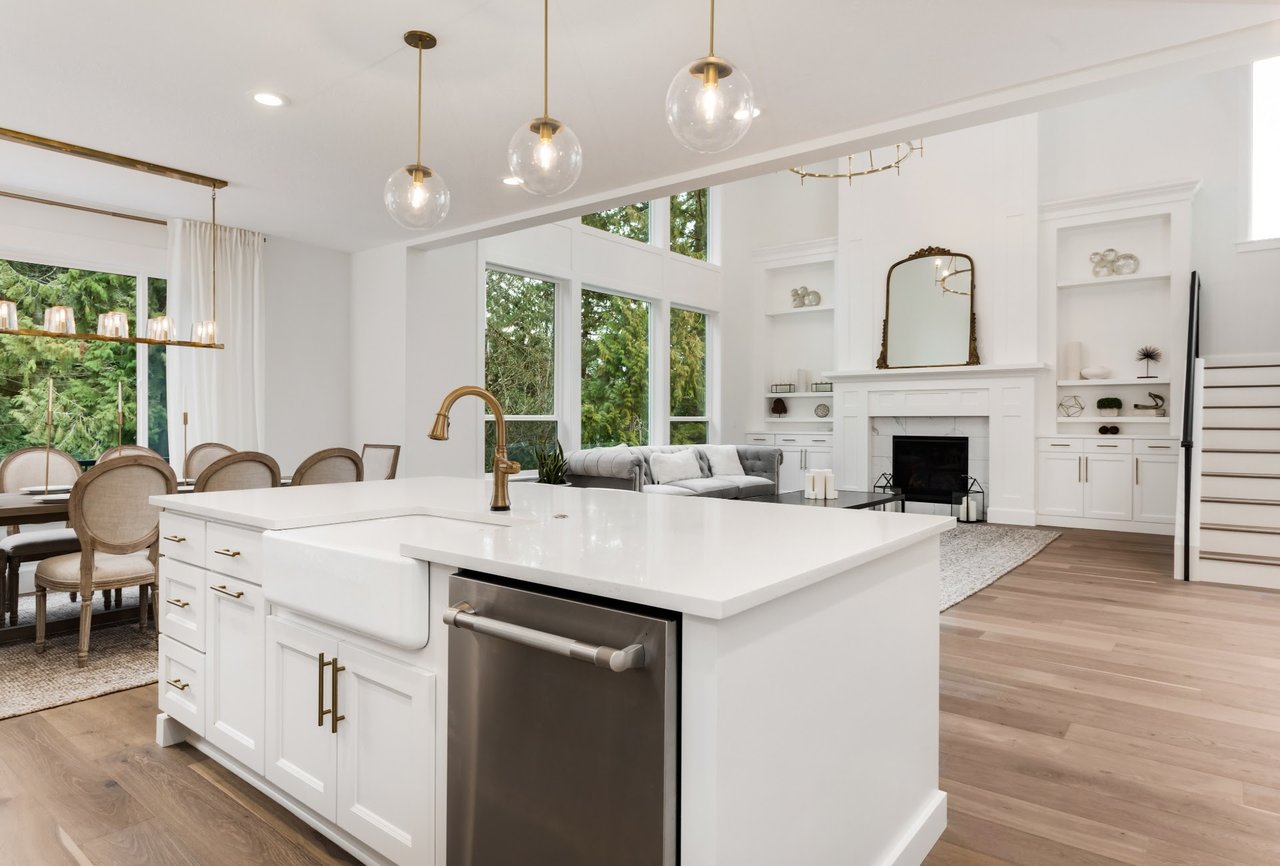
Verona homes stopped selling over asking price somewhere around April 2026. By then, buyers closing on a home were paying roughly what the seller asked, not the 3, 4, or 5 percent premiums that defined the market a year earlier. Anyone reading that number alone would assume the frenzy had ended and relief had arrived for the family trying to trade a three-bedroom starter for something with a fourth bedroom and a bigger yard. It hadn't. The homes in exactly that price range were still gone in about a week, and there still weren't enough of them to go around.
That's the part the portals don't show. A median home value or a citywide days-on-market number tells you what happened across every closing, from the condo conversions to the lake-adjacent estates. It doesn't tell you what happened in the one slice of the market where a move-up family is actually shopping, which in Verona has been the $500,000 to $700,000 range for most of 2026.
What "under one month" actually meant
At the start of the year, that bracket wasn't just tight. It was close to empty. The December 2025 snapshot pulled from South Central Wisconsin MLS data showed the $500,000 to $599,000 range sitting at 0.44 months of supply, which meant two active listings against the pace of sales in that range. The $600,000 to $699,000 range wasn't much better at 0.71 months. Combined, the two brackets that cover most move-up buyers had four listings total in a city where December closings had jumped 58.8 percent year over year.
Overall supply across every price point in Verona sat at 1.37 months that same week, itself an extreme seller's market by any conventional measure. But the number that mattered to a family selling a starter home and needing a bigger one wasn't 1.37. It was 0.44 and 0.71, because that's the shelf they were shopping from, and the shelf was nearly bare.
The premium disappeared. The shortage didn't.
Move forward to spring and the picture shifts in a way that looks, on the surface, like the market loosening up. By March, Verona's median had climbed to $468,500 with homes going under contract in a median of 5 days and overall supply edging up to 1.46 months. Sourced from SCWMLS data as of the March 1, 2026 snapshot, that's still classified as an extreme seller's market, but the direction was toward more breathing room.
By April closings, reported in the following month's update, the single-month median reached $515,000 (down 4.6 percent from the same month a year earlier) while the year-to-date median through April held at $500,000, up 3.1 percent from 2025. Supply had grown to 1.57 months across 43 active listings, and homes were still turning under contract in a median of 7 days. The detail worth sitting with is the bidding behavior: the average sale price ran just 0.42 percent above list price year to date, essentially at asking rather than above it.
That's the whole story in one contrast. A year earlier, buyers in this bracket were bidding each other up. By spring 2026, they'd stopped doing that, but they hadn't stopped moving fast, and there still weren't many more homes to choose from than there had been in January. The frenzy premium vanished. The underlying math that created it in the first place, too many buyers for too few listings in a specific price window, never really changed.
Why this bracket specifically
Part of the reason the shortage concentrates exactly here traces back to who's buying in Verona and why. The city's list of major private employers includes Epic Systems, the medical software company whose headquarters campus sits close enough that commute time barely factors into a house hunt. Carnes Company and Latitude Corporation round out the list of employers the city itself points to as economic anchors. A software developer or systems analyst moving into a mid-career role, with a family that's outgrown a starter home, tends to land in exactly the $500,000 to $700,000 range that's been running dry all year.
Layer in the state's broader affordability picture and Verona's tightness starts to look less like a local anomaly and more like a place absorbing pressure better than most. The Wisconsin REALTORS Association's August 2026 report showed existing home sales falling 8.3 percent statewide compared to August 2025, with the Central, North, and West regions posting the steepest declines, between 11.9 and 14.5 percent. The South Central region, which includes Dane County and Verona, fell just 0.9 percent over the same period. Statewide affordability had declined for six straight months and sat at its lowest level since the association began tracking the measure in 2009. Verona's bracket wasn't immune to any of that. It just had enough underlying demand to keep absorbing it without the same drop-off other parts of the state saw.
None of this shows up in a single median price. The full-year 2025 figure for Verona landed at $484,900, actually a slight moderation from $505,600 in 2024. Read on its own, that looks like a market cooling evenly across the board. It isn't. The moderation is happening at the edges, in the price points with more inventory to spread the pressure across, while the $500,000 to $700,000 window stays exactly as constrained as it was in January.
The one variable that could change the math
If anything is likely to shift this bracket over the next year, it's what just opened on Verona's south side. SSM Health dedicated its new outpatient center on September 14, 2026, a 40,000 square foot facility near the intersection of Highways 151 and 69, the first phase of a planned medical campus on a 97-acre site. The project required annexing the land into the city and preserved nearly 60 acres of surrounding agricultural ground for future phases.
Mayor Luke Diaz didn't frame the opening as just a healthcare story. In the city's own account of the dedication, he said the facility had opened access to Verona's south side to inspire new growth opportunities that would bring new jobs and businesses to the area. Developers are already responding. Land near the new campus has started appearing on the market specifically marketed for its proximity to both the clinic and Epic's headquarters, the kind of positioning that only makes sense if builders expect the south side to be where Verona's next wave of construction lands.
That doesn't resolve the $500,000 to $700,000 shortage today. New construction on annexed land takes years to reach the resale market, and a medical campus isn't the same as new subdivisions. But it's the first concrete signal in over a year that supply pressure on Verona's south side might loosen from somewhere other than existing homeowners deciding to sell.
Does this mean prices in this bracket will keep climbing? The data through April shows the premium buyers pay above asking has already flattened to almost nothing. Prices aren't spiking. They're holding, because the number of buyers who need a home in this specific range still outpaces the number of sellers listing one.
What does this mean if you're the one shopping in this range right now? Speed still matters more than negotiating room. Homes in this bracket were closing in a week as of the most recent data, even with bidding wars gone. A buyer who waits to see three or four comparable listings before deciding tends to watch all of them go under contract first.
If you're trying to figure out where your own move fits into this bracket, whether you're selling a starter home into it or trying to buy your way in, The See Team can walk you through what's actually available in Verona right now and what a realistic timeline looks like from listing to closing.