In July 1993, about sixty people crowded into the Middleton Public Library to hear a Miami architect explain why a wealthy local developer wanted to build a town that broke the city's own zoning rules. Marshall Erdman had asked Andres Duany, of the firm Duany Plater-Zyberk, to design something on 150 acres he had owned for decades. Duany's streets were 26 feet wide. Middleton's code required 32. A hundred residents signed a petition opposing the whole idea, worried about traffic and pushing instead for a park. The city eventually approved a revised plan in late 1994, Erdman broke ground in August 1995, and the first houses went up in 1996, months after he died. That project became Middleton Hills, widely credited as the first single-family new urbanist neighborhood built in Wisconsin.
Three decades later, Middleton Hills is doing something its founders probably didn't expect. While the broader Middleton market keeps climbing, the neighborhood that started it all is cooling off.
The Numbers That Don't Match the Story
Over the three months ending in May 2026, homes in Middleton Hills sold at a median price of $607,000, down 7.3 percent from the same period the year before. The average sale price in the neighborhood was $790,000 in June 2026, down 3.7 percent year over year. Only six homes closed in May 2026, the same thin count as the year prior.
That's not what the rest of Middleton is doing. Over that same three-month window ending in May 2026, the city as a whole sold homes at a median of $559,000, up nearly 12 percent year over year, with 73 homes changing hands in May alone. Homes across Middleton were also selling faster, averaging 55 days on market compared to 67 the year before.
Put those two data sets side by side and you get a genuine puzzle. The neighborhood with the strongest brand, the deepest walkability, the most mature tree canopy, and three decades of "sought after" write-ups behind it is softening while the rest of the city firms up. That's backward from how these stories usually go.
Three Portals, Three Different Answers
Before chasing an explanation, it's worth pausing on how easy it is to get a wrong one. Ask three different sources what Middleton's citywide market did over the past year and you'll get three different answers. One portal's August 2026 read on Middleton showed the median list price down 11 percent year over year. Another, using sold-price data through May 2026, showed the median up almost 12 percent. A third, using an automated valuation index built from estimated home values rather than closed sales, put the typical Middleton home value up 2.2 percent over the year.
None of those numbers is wrong exactly. They're measuring different things: list prices versus closed sales versus a smoothed index, over different windows, pulling from different slices of inventory. The lesson for anyone shopping headlines is that a single median, quoted without its methodology, tells you less than it sounds like it does. The more useful number is almost always the neighborhood-level one, because that's where the actual competing product lives.
Which brings us back to Middleton Hills.
The Neighborhood Competing With Its Own Blueprint
Here's the mechanism that the citywide numbers hide: Middleton Hills isn't just competing with generic Middleton subdivisions anymore. It's competing with a newer version of itself.
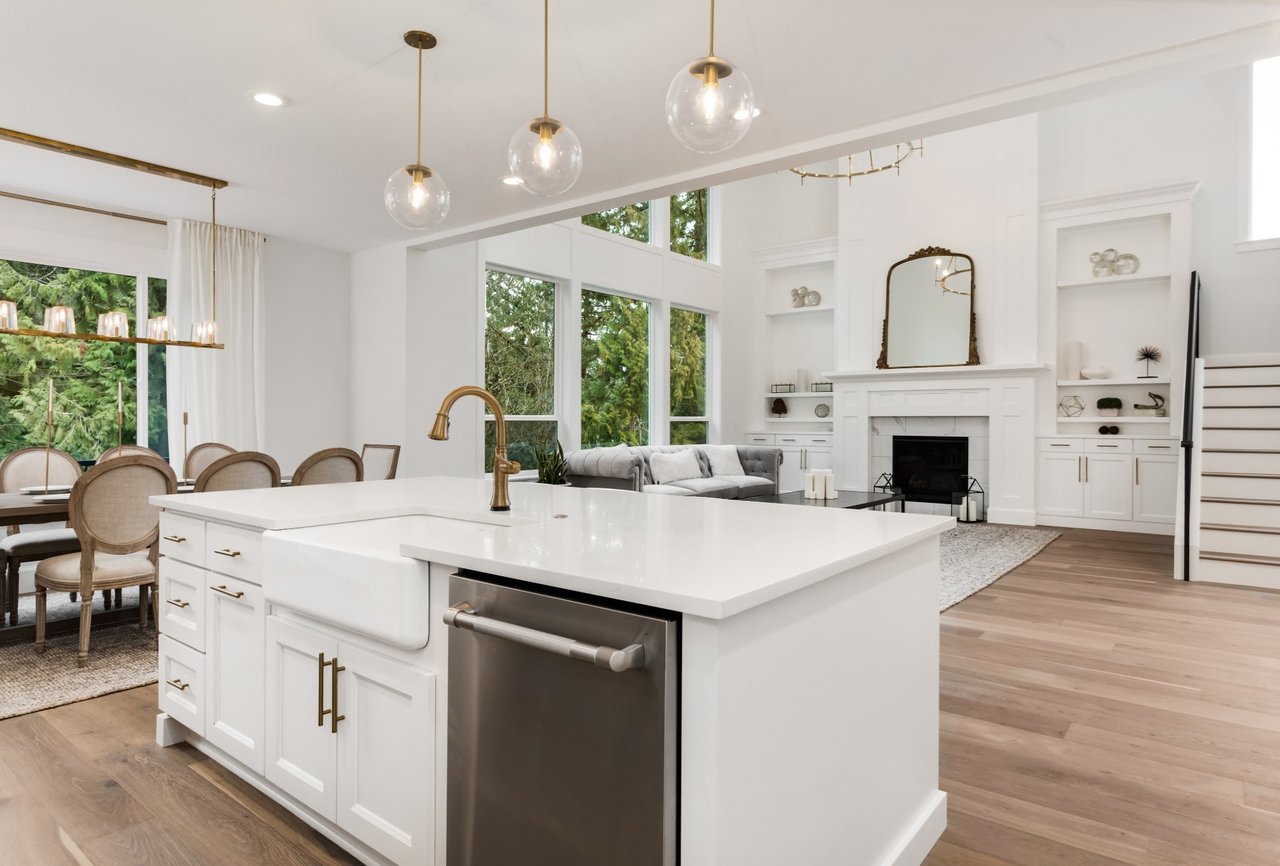
A few miles away, a development called Belle Farm is under active construction along Parmenter Street, marketed by its own listing agents as "a new urbanism neighborhood in Middleton, Wisconsin." It's approved for 880 residential units, including several multifamily parcels designed to share amenities with the single-family blocks around them. The builder marketing leans hard into the same values Duany once sold to skeptical Middleton residents: main-level living, walkable scale, a stated focus on wellbeing and a lighter footprint on the land. Listings from this year describe homes with private first-floor primary suites, wood-burning fireplaces, and kitchens outfitted with Sub-Zero, Wolf, and Cove appliances, new construction throughout, with additional phases still ahead given the 880 units approved overall.
A little further north, the Community of Bishops Bay offers a third version of the same basic pitch, walkable neighborhood living, but wrapped around a golf course instead of a Main Street, gated, and organized into seven distinct sub-neighborhoods with their own parks and trail connections. Some Bishops Bay addresses even fall into the Waunakee school district while still carrying a Middleton location, giving buyers a hybrid option Middleton Hills never offered.
For a buyer who wants sidewalks, small setbacks, and a five-minute walk to daily errands, that's now three products competing for the same demand instead of one.
| Middleton Hills | Belle Farm | Community of Bishops Bay | |
|---|---|---|---|
| Built | Starting 1996 | Under active construction now | Multi-phase, ongoing |
| Design pedigree | Andres Duany, DPZ, original new urbanist template | Markets itself explicitly as new urbanism | Master-planned, golf-course community |
| Housing stock | Established homes, roughly 400 units total | New construction, builder warranties | New construction, custom and spec |
| Defining feature | Alley-loaded garages, narrow streets, Frank Lloyd Wright Avenue | Wellbeing-focused site plan near Graber Pond | Gated, Bishops Bay Country Club, some Waunakee schools |
That table is the whole explanation. A buyer who twenty years ago had exactly one place in Middleton to find this lifestyle now has three, and two of them come with new roofs, new mechanicals, and a builder warranty instead of a 1997 furnace.
What Three Decades of Trees Actually Buys You
None of this means Middleton Hills lost its appeal. It means the appeal is no longer scarce, and scarcity is most of what drove the premium in the first place.
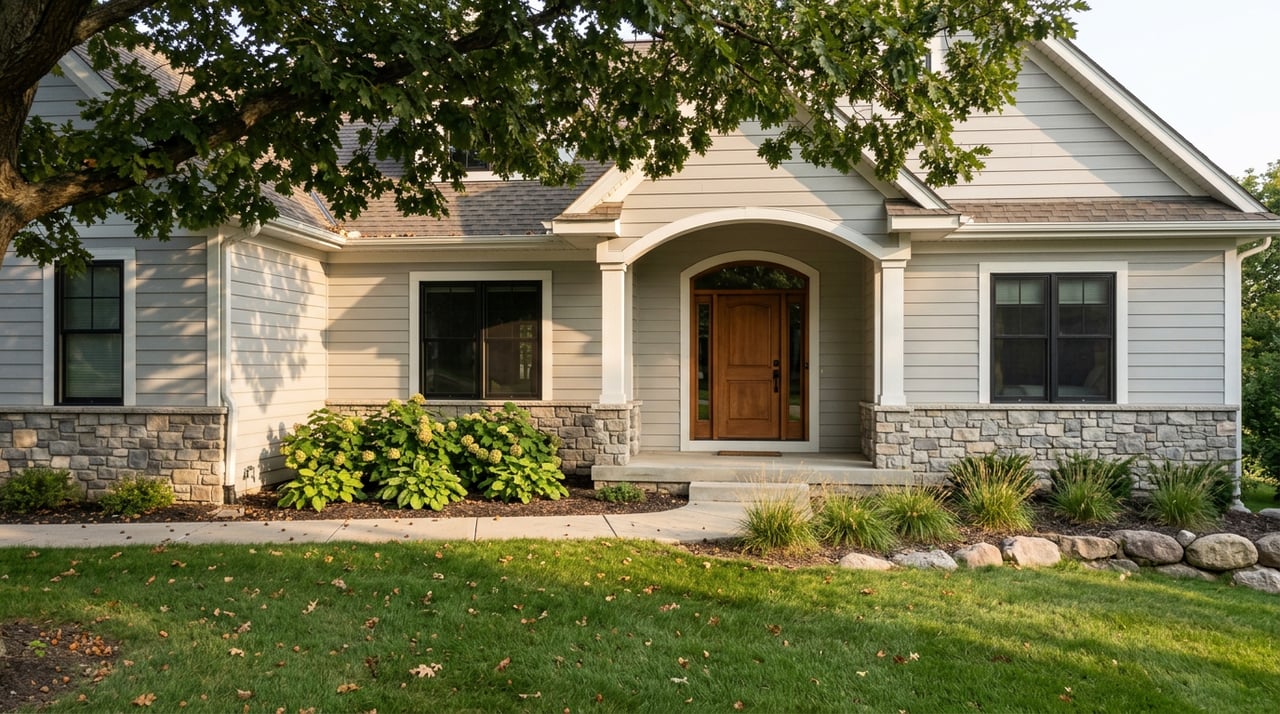
What Middleton Hills still has that neither Belle Farm nor Bishops Bay can manufacture on any timeline is thirty years of tree canopy over those narrow streets, a commercial strip that's had three decades to fill in with an actual grocery store, cafe, and dry cleaner rather than renderings of one, and a neighborhood association with a real history of managing design standards through actual disputes. A newly graded lot along Parmenter Street can copy the street grid. It cannot copy the shade.
That's a genuine trade-off, not a downgrade. Buyers who value established character over builder-grade finishes are looking at a walkable Middleton product that's currently priced softer than it's been in years, without needing to wait for landscaping to catch up.
What This Means If You're House Hunting Right Now
If walkability is the priority and you're comparing Middleton Hills against Belle Farm, the honest framing is new versus established, not better versus worse. Belle Farm buys you modern systems and a builder warranty on a landscape that's still filling in. Middleton Hills buys you mature trees, an established retail block, and a softer price than the neighborhood has posted in recent memory, on a house that may need updating.
The catch on the Middleton Hills side is volume. Six sales in May 2026 means the "median" for the neighborhood swings hard based on which specific houses happened to close, so a single high-end sale or a cluster of smaller homes can move that number several percent in either direction. Anyone pricing an offer off a neighborhood median here should treat it as a rough signal, not a fixed number, and lean on recent comparable sales inside Middleton Hills specifically rather than citywide averages.
What This Means If You're Selling in Middleton Hills
Sellers in the neighborhood are now marketing against product types that didn't exist when Middleton Hills was the only game in town. That changes what's worth highlighting. Original character details, the front porch, the alley-loaded garage, proximity to Northside Elementary and the walk to Frank Lloyd Wright Avenue's shops, carry more weight now precisely because a newly built home nearby can't replicate them yet. Updated mechanicals and kitchens matter more too, since a buyer weighing an older Middleton Hills home against new construction at Belle Farm is going to price in the age gap on furnaces and roofs whether a seller addresses it or not.
Common Questions, Answered Plainly
Does a softer median mean Middleton Hills lost value as an investment? Not necessarily. A neighborhood with six sales in May 2026 doesn't generate a stable trend line the way a market with hundreds of monthly transactions does. The direction matters less here than the underlying cause, which is new competing supply rather than declining demand for the neighborhood itself.
Should I buy in Belle Farm instead of Middleton Hills? That depends on what you're optimizing for. New construction, current code, and a builder warranty point toward Belle Farm. An established tree canopy, a functioning commercial block, and a documented three-decade track record point toward Middleton Hills. Both are legitimate answers to the same question.
Why do citywide Middleton price reports contradict each other? Because they're measuring different things, list prices versus closed sales versus index-based estimates, over different time windows. None of the numbers are fabricated, but none of them alone tells the whole story either. Neighborhood-level data is almost always more useful than a citywide headline.
If you're weighing Middleton Hills against its newer neighbors, or trying to figure out what a thin sales month actually means for your own listing, that's exactly the kind of read-between-the-medians work The See Team does for clients across Middleton and the rest of Dane County. Start your Madison home journey with a conversation, not a headline.